
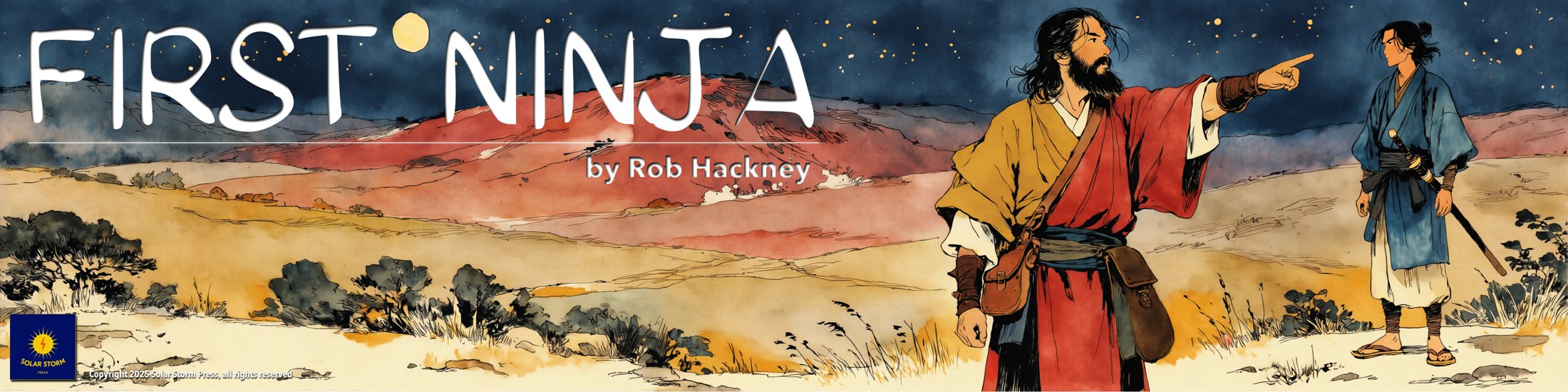
History remembers the ninja. It forgot the man who inspired them.
Before the legend, there was a lesson.
First Ninja reimagines one of history’s great military mysteries — not how the ninja emerged, but why a civilisation would need to invent an entirely new philosophy of war. Set against the gathering shadow of the second Mongol invasion of Japan in 1281, it follows Farrukh al-Saif, a Persian assassin who has already watched one civilisation fall — and who crosses a continent to warn another before history repeats itself. The tragedy is that nobody wants to hear it.
A story about learning the wrong lessons
Seven years earlier, storms wrecked the first Mongol fleet and Japan called it divine intervention — the kamikaze. The gods rejected the invaders; the danger had passed. Farrukh knows this is precisely the wrong conclusion. Empires do not think like kingdoms. The Mongols catalogue every failure; every defeat becomes intelligence, every campaign reconnaissance. Where Japan sees a victory, they see a field test — and they are coming back with more ships, more engineers, more allies, and far more knowledge than before.
An empire unlike any before it
The Mongols aren’t a faceless horde but perhaps the greatest strategic machine the medieval world produced — Persian scholars, Chinese engineers, Korean shipbuilders, Turkic horse archers, all absorbed into one system. Every civilisation they conquer makes the next conquest easier. Farrukh has lived inside that machine. He understands what Japan has never faced: the Mongols are not stronger because they fight better. They are stronger because they learn faster than everyone else.
Persia’s Ghost
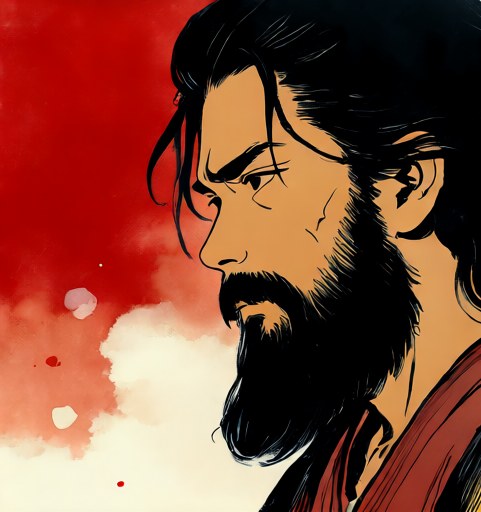
Though set in Japan, Persia never leaves the story. Through Farrukh’s memory the reader experiences the fall of a great civilisation — not as a history lesson, but as trauma. He remembers cities so completely erased that grass now grows where markets stood; princes who chose temporary advantage over survival; scholars who believed civilisation itself made them untouchable. Every warning he gives Japan is really an apology to Persia.
Honour meets adaptation
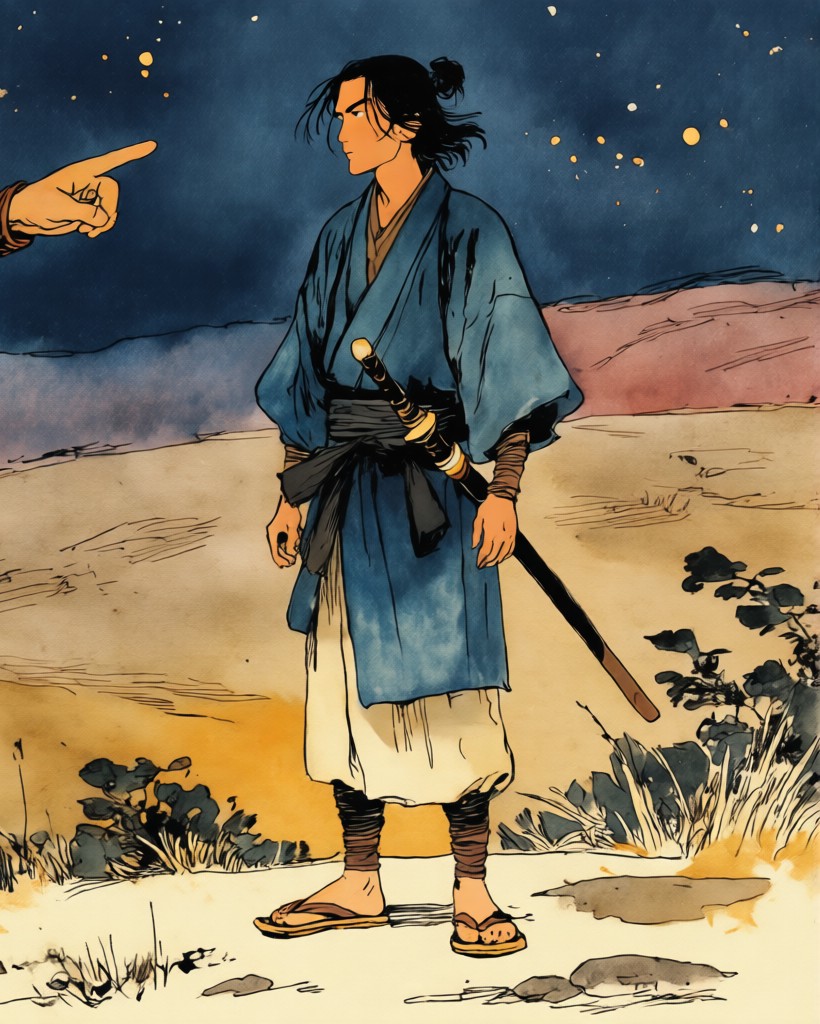
This is not a story about abandoning the samurai tradition — it’s about evolving it. Japan has extraordinary warriors but no doctrine for an enemy that refuses the rules. The samurai understand courage; the assassins uncertainty; the monks patience; the hunters terrain; the fishermen tides. None hold the whole answer.
Together they build something new — victory through information rather than strength, precision rather than numbers, movement rather than territory. The birth of the ninja is not a costume or a weapon. It is a different way of thinking.
The Real Weapon Is Intelligence
The decisive weapon throughout is information — who knows first, adapts first, notices the pattern first. Espionage, misinformation, logistics and psychology carry the same charge most epics reserve for the swordfight. The true contest is over long before the armies meet — and the greatest battlefield is never the shoreline. It is the council chamber, where a divided people does the enemy’s work for them.
History through possibility
The Mongol invasions happened. Persia fell. Japan resisted. The ninja emerged. History records these separately; First Ninja imagines they were connected — that knowledge travelled farther than armies, that one survivor carried Persia’s lessons across Asia. It does not claim this is what happened. It asks whether it could have.
Beneath the battles is a story about memory, and about whether one nation’s tragedy can become another’s warning. Perhaps the greatest weapon ever carried across Asia was not a sword — but an idea.
“A historical epic that actually earns the word — Farrukh is one of the great tragic mentors in recent comics.”
— Amazon reader
“Persia fell. Japan was warned.” — First Ninja is in development at Solar Storm Press. The full series bible, sample material and concept art are available on request.