George Russell, Kimi Antonelli and the Mercedes equation
The 2026 season, the championship, the machinery of support, and the question that remains after the lights go out.
Header: Mercedes on the podium at the 2026 Australian Grand Prix. Photo: Yu Chu Chin / Wikimedia Commons, CC BY-SA 4.0. Black and white conversion and crop by robhackney.com.

A championship can settle the standings. It cannot, by itself, settle every question about how a team arrived there.
The tow
There are questions in Formula 1 that sound trivial until you understand what they are standing in for. “Can a guy get a tow?” is one of them.
At Las Vegas, with the Strip laid out as a long, cold, unforgiving drag strip and the 2026 championship already settled, George Russell wanted the sort of assistance that is routine in the sport and unusually valuable on that circuit: a team-mate ahead, cleanly positioned, giving him a slipstream down the long straights. Kimi Antonelli had already secured the Drivers’ Championship. He carried a five-place grid penalty. Russell was still engaged in the less glamorous business of fighting for position in the table, and every tenth mattered.
The request was not unreasonable. Nor was the engineering problem entirely straightforward. Mercedes said the strength of the tow had caught the team by surprise; Russell had looked well placed, Antonelli found a powerful slipstream in the final sequence, and the team did not execute the arrangement Russell had asked about. Russell qualified third, promoted to the front row by Antonelli’s penalty. Antonelli set the fastest time but started sixth. The team had two cars in a position to fight; one driver received the benefit of the decisive tow, the other did not.
The immediate result was not a catastrophe. Russell still started second. But the incident acquired a meaning beyond its grid arithmetic. It landed on top of a season in which the Mercedes garage repeatedly asked observers to accept that two drivers were being treated equally while the visible distribution of attention, protection, engineering authority and opportunity appeared more complicated.
A missed tow does not prove sabotage. But a team’s credibility is built in small decisions as much as grand declarations. When a driver has spent years being the reliable one, when a teenage team-mate has become the centre of a championship story, and when the senior engineering structure overlaps in unusual ways, a procedural mistake is not received in a vacuum. It is read against the history that precedes it.
Then came the race. Max Verstappen won a chaotic Las Vegas Grand Prix. Antonelli finished fourth; Russell, after hitting the wall while fighting for position, finished ninth. The championship positions were already settled at the top: Antonelli was world champion, Mercedes had secured the Constructors’ title. Verstappen’s victory strengthened his hold on second in the Drivers’ standings; Russell left Vegas fourth, behind Verstappen and Lewis Hamilton, level on points with Lando Norris. The season was not over, but the central prizes were decided.
That is the peculiar bitterness of the ending. Kimi had delivered a championship campaign of extraordinary quality. Mercedes had won the Constructors’ Championship. George had contributed to that success and remained a major part of the team’s competitive strength. Yet the question hovering over the garage was whether the organisation had been as deliberate about backing Russell as it had been about building Antonelli.
This is a story about two very good drivers. It is also a story about a team that has to decide whether its public language of equality is matched by the internal architecture of responsibility.

The driver who kept turning up
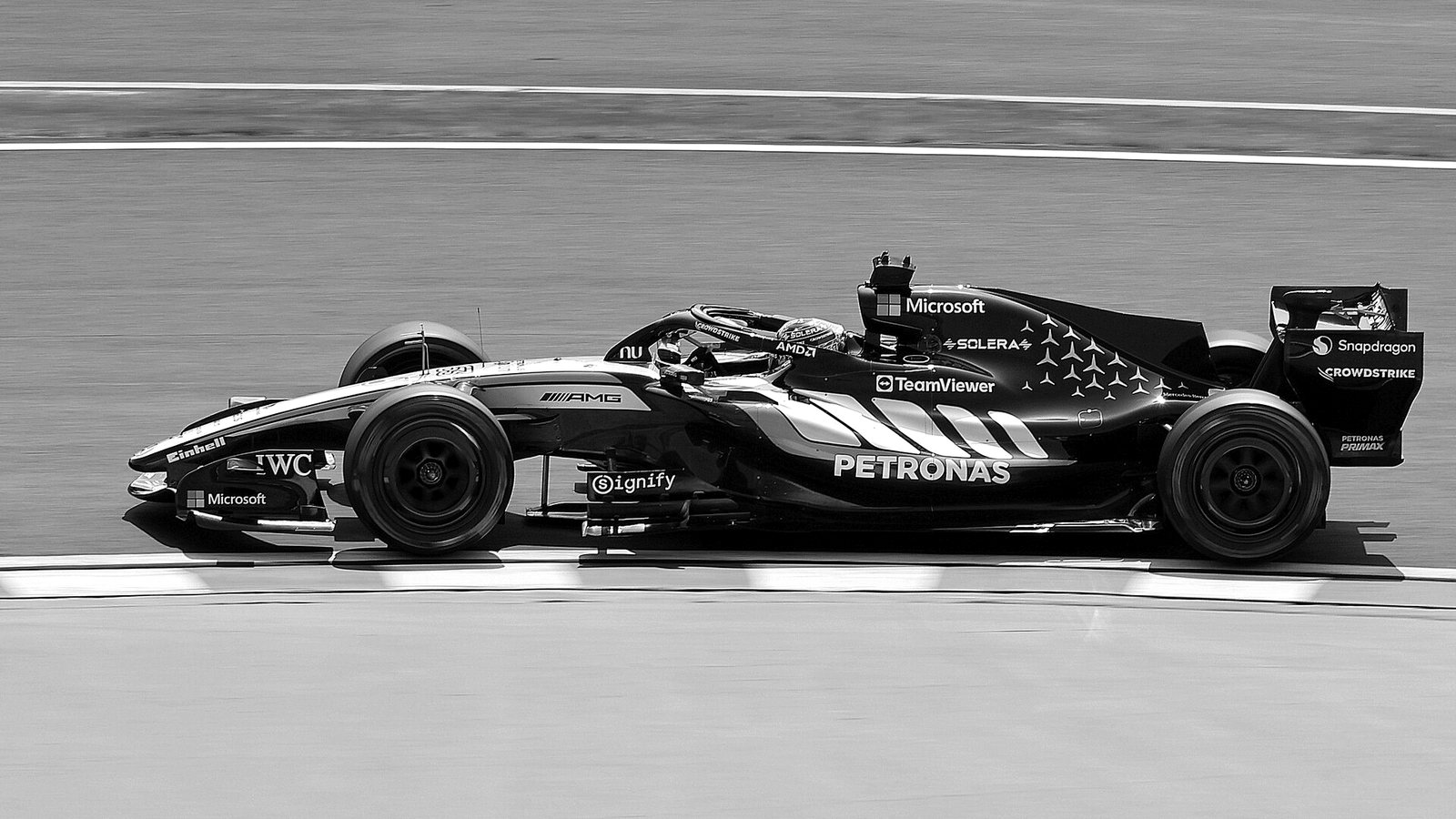
George Russell did not arrive in Formula 1 as an unfinished prospect waiting for a powerful patron to explain the sport to him. His junior record was unusually complete. He won the GP3 title in 2017 and the Formula 2 championship in 2018, both in his first season in those categories. He was a Mercedes junior, but the programme did not simply place him in a silver car and ask the world to admire the result. It sent him to Williams, where he learned to race in machinery that often made a clean weekend feel like an act of resourcefulness.
The Williams years became a peculiar apprenticeship. Russell acquired the reputation of a qualifying specialist, the “Mr Saturday” label that both recognised his speed and threatened to diminish it. A driver who repeatedly extracted more from a poor car than its competitive position suggested could be praised for Saturdays while being denied the Sundays that make a career. The distinction was unfair, but it became part of his public identity.
His 2020 Sakhir substitute appearance for Mercedes offered a compressed demonstration of what the team already knew. Standing in for Lewis Hamilton, Russell qualified second, just 0.026 seconds behind Valtteri Bottas. He led the race, then lost time when Mercedes fitted Bottas’s front tyres to Russell’s car during a pit stop. He recovered into contention before a late puncture ruined the result. He finished ninth. It was a near-miss assembled from speed, composure, a team error and bad luck; a preview of the strange relationship between Russell’s ability and the circumstances around him.
When he joined Mercedes full-time in 2022, the car was not the expected championship instrument. The W13’s porpoising and fundamental handling problems turned the team’s first ground-effect seasons into a prolonged engineering argument. Russell beat Hamilton in the 2022 championship and won the São Paulo Grand Prix, but the result should not be mistaken for a clean comparison between two drivers in a settled hierarchy. Mercedes was trying to understand a car that did not behave as its designers intended.
The W14 did not solve the problem. Russell remained the dependable operator through a period in which the team was searching for direction, while Hamilton remained the seven-time champion whose status inevitably shaped the public conversation. Russell’s role was to perform, develop, score and wait. The team’s future was still being negotiated around him.
There is a particular kind of loyalty that grows in a difficult organisation. It can be a calculation that the people, technical resources and long-term opportunity remain worth the inconvenience. Russell stayed. He absorbed the bad machinery, the uneven weekends and the questions about whether Mercedes could return to the front. He became a known quantity at the very moment the team was preparing to make a spectacular bet on an unknown one.
The danger of being the known quantity is that reliability can become invisible. A team may start to treat a driver’s consistency as a fixed resource, something that will be there regardless of the attention paid to it. The driver who does not need to be managed becomes the driver who receives less management. The driver who understands the system is expected to accommodate its changes. The driver who has already waited is asked to wait again.
Russell was never owed the team. He had earned a clear account of his place within it.
Kimi: the extraordinary prospect becomes the present
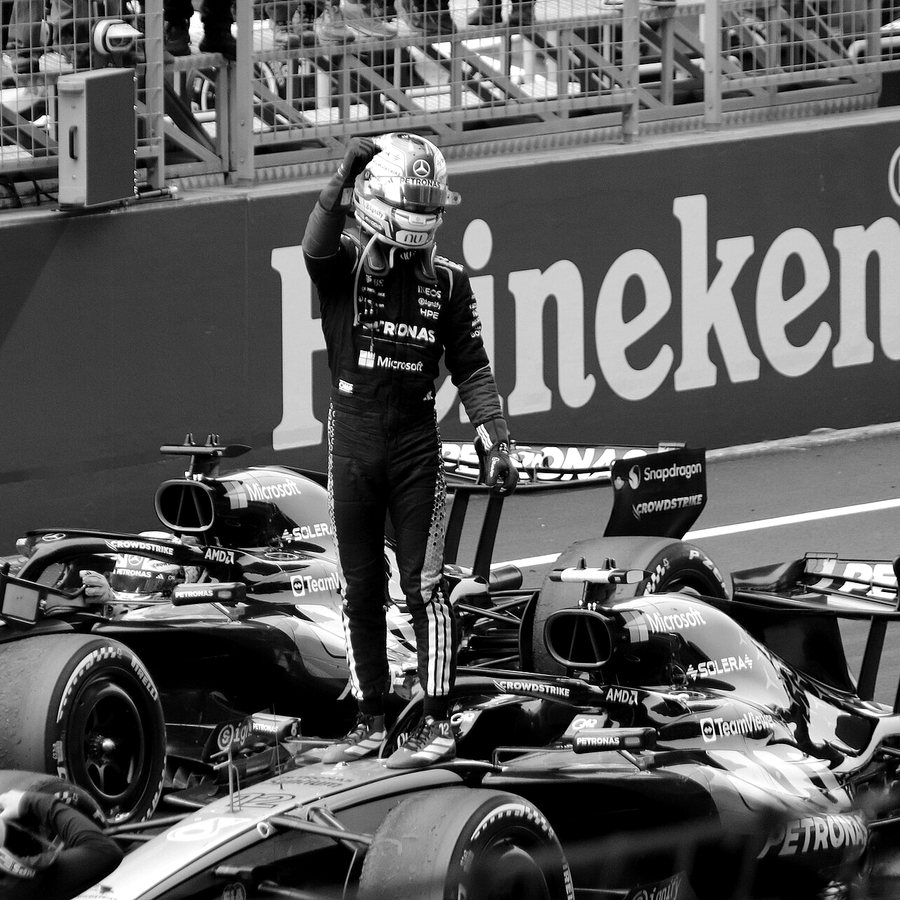

Kimi Antonelli’s arrival at Mercedes was an unusual promotion. He was a highly rated junior, a product of the team’s development programme, and a driver whose speed had been discussed in unusually grand terms before he had completed a Formula 1 season. Mercedes chose to move him directly into the seat vacated by Hamilton rather than reproduce the longer apprenticeship Russell had served at Williams.
That decision carried obvious risk. It also carried obvious logic. Antonelli’s junior performances had persuaded Mercedes that it was looking at a generational prospect. The team had invested in him, followed his development closely, and believed that the best way to protect the investment was to put him inside the organisation rather than send him elsewhere. It was an assertion of confidence, but also a public commitment. Once a team promotes a teenager into one of the most visible seats in the sport, every weekend becomes part of the story it has chosen to tell.
Antonelli’s early Formula 1 career contained the expected mixture of flashes and mistakes. What mattered was the rate of learning. He was not required to become a finished driver overnight; he was given room to make errors, analyse them and return. Toto Wolff repeatedly described the process as a long game. In 2026, that patience was rewarded on a scale that exceeded even the optimistic version of the plan. Antonelli won the Drivers’ Championship, and by the time the circus reached Las Vegas, his title was secure.
His success should not be qualified away. A championship requires pace, judgement, consistency, technical feedback, the ability to recover from bad weekends and the capacity to execute under pressure. Antonelli delivered those things. He deserves the title. He has not been carried to it by a public-relations strategy, and it would be absurd to suggest that a race engineer or a team principal can manufacture the performance required to win a world championship.
But a driver can be both genuinely exceptional and institutionally favoured. Those propositions do not cancel one another. Kimi plainly deserved the opportunity. The question is whether Mercedes’ decision to accelerate his development also changed the balance of the organisation around the two drivers.
Russell was the established employee asked to share a garage with the team’s most important future-facing investment. Antonelli was the future arriving ahead of schedule, surrounded by a structure designed to help him become the present. Not every call favoured Kimi. But the incentives and relationships were uneven from the start.
Mercedes could reasonably believe that it was backing both drivers. Yet the organisation also had a clear interest in making its bold succession decision look correct. A championship for Antonelli would validate the decision to promote him, vindicate Wolff’s judgement and give the team a new centre of gravity after Hamilton’s departure. Russell’s success would be valuable too, but it would not tell the same story. It would not prove that the high-risk succession plan had worked.
That is where the pressure enters. A team can be honest in its belief that both drivers matter and still have an institutional preference for the outcome that validates its strategy.
The Max question and the Wolff horizon
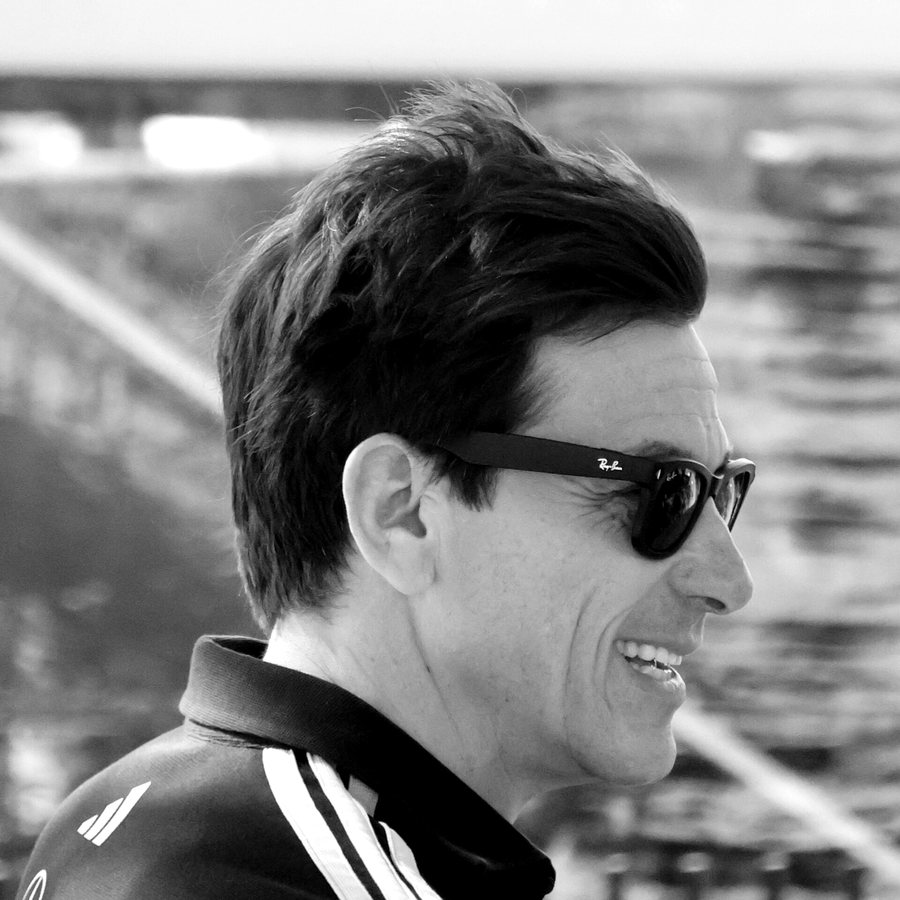

For much of the succession conversation, Max Verstappen hovered over Mercedes like an alternative ending. Wolff’s interest in Verstappen was no secret. The prospect of recruiting a reigning world champion had obvious appeal, and the public courtship became part of the wider Wolff–Red Bull–Christian Horner drama. It was a question of driver quality, and also of power, leverage and the identity of Mercedes after Hamilton.
Here, Verstappen is treated as committed to Red Bull and outside the future Mercedes line-up. He remains relevant as a rival and as a measuring stick, particularly in Russell’s battle for second in the 2026 Drivers’ Championship. But he is no longer the hypothetical third driver around whom Mercedes’ internal succession strategy must be organised.
The Verstappen episode still exposed the degree to which Mercedes was prepared to keep its options open. Russell was already in the seat, delivering for the team, while the organisation explored whether a bigger name might become available. From a team principal’s perspective, that is prudent market management. From a driver’s perspective, it is a reminder that a contract does not necessarily confer emotional or strategic security.
Wolff is not obliged to stop considering alternatives. A team principal who refuses to examine the market is not doing his job. But there is a difference between managing a driver market and allowing the incumbent to feel that his future is permanently provisional. A driver can understand the commercial realities and still notice where the organisation’s attention goes.
For Russell, the real question came after the choice to build around him and Antonelli. Did the team establish a clear internal settlement? Did George know what Mercedes expected of him? Did he have a credible route to becoming the team’s principal reference? Was Antonelli’s development protected without Russell being turned into the permanent control group?
Those questions are not answered by a press release or a contract announcement. They are answered in the way the team allocates engineering attention, responds to competing requests, manages strategy, shares information and treats both drivers when the outcome is uncertain.
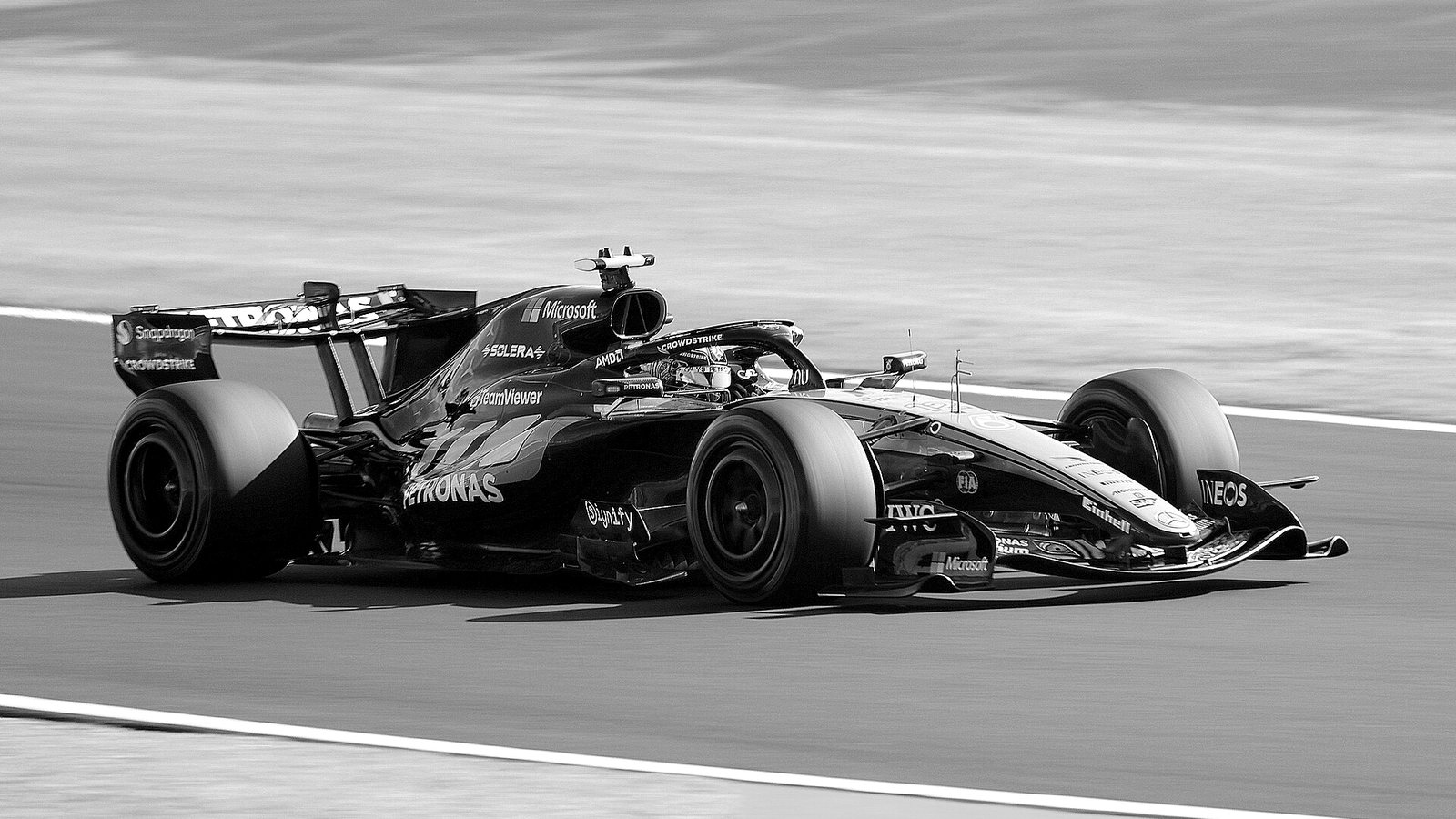

The season in incidents
One radio message proves nothing. The strongest case against Mercedes comes from examining the season’s decisions in sequence, including the evidence that cuts against the argument.
Canada offered one of the most dramatic examples of the two drivers being allowed to race. Russell and Antonelli fought hard at the front, trading positions and running close enough to make the team’s nerves understandable. Russell eventually retired with a power-unit problem while leading; Antonelli went on to win. The result was painful for Russell, but the available account points to a mechanical failure, not a strategic decision to favour his team-mate. Antonelli’s victory was earned in the race that remained to him.
The Canadian weekend is important for another reason. The radio exchanges and race management showed the two race engineers operating in parallel, with Marcus Dudley communicating with Russell and Peter “Bono” Bonnington communicating with Antonelli. The team had to manage the fight, protect both cars and decide when the drivers’ own judgement was no longer enough. It was a live demonstration of how much authority sits in the engineering channel, and how quickly a driver’s understanding of the race is filtered through the people speaking in his ear.
At Zandvoort, Mercedes asked Russell to let Antonelli through after the Italian had taken a late stop for fresher tyres under the Virtual Safety Car. Russell initially questioned the instruction, then complied. The team argued that the tyre offset made Antonelli the stronger immediate prospect and that the swap was the logical consequence of the strategy. Russell later accepted that the decision was right, even while acknowledging the frustration of giving up a position in a race where every place mattered.
This is not a clean example of the team favouring Kimi. The call was made in a context where Antonelli had fresher tyres and a plausible chance to attack the car ahead. Russell ultimately retained the podium. But it does illustrate the asymmetry of the emotional burden: one driver receives the opportunity created by the strategic call; the other is asked to surrender track position and trust that the calculation will be vindicated.
At Monza, the strategic split was even more consequential. Antonelli started from the back after a power-unit penalty and fought his way to the front. Under a Virtual Safety Car, Mercedes split the cars: Antonelli stopped for fresh tyres; Russell stayed out. The team said the decision was intended to maximise its chance of victory by covering different possibilities. Antonelli’s pace made the two-stop strategy work, and he passed Russell late in the race to win his home Grand Prix.
Russell admitted he had expected both cars to stay out and was surprised when Antonelli pitted. He also acknowledged that the team could not know in the moment which strategy would prove superior. This is the essential complication. A split strategy is often the rational way to preserve options. But when one side of the garage repeatedly emerges with the more dramatic narrative, the other driver can begin to feel that he is being used as the stable platform against which the team takes its risks.
The Singapore specification split added another layer. Mercedes chose to run Russell and Antonelli on different car specifications as it tried to understand why its latest upgrade had made the W17 more difficult to drive. Russell reverted to an earlier specification while Antonelli retained the newer package and tested further components. Wolff described the arrangement as a necessary compromise to establish a clearer technical comparison. This is a legitimate engineering method. It is also a reminder that equal treatment does not mean identical equipment at every moment. The relevant questions are whether the test rationale is sound, whether both drivers understand it, whether the results are shared and whether the team is prepared to act on what it learns.
A fair analysis must include these counterweights. Russell has not been denied every opportunity. He has won races, taken poles, received strategic support and been treated as a serious contender. Antonelli has also had difficult weekends, penalties, mistakes and moments when the team’s choices did not make his life easier. The evidence does not support a simple story in which one driver is protected and the other is sacrificed.
But it does support a more interesting question: what happens when a team’s strategic choices, engineering relationships and public narrative all place one driver at the centre of the project, while the other is expected to be the professional who makes the project function?
The man running both sides of the garage
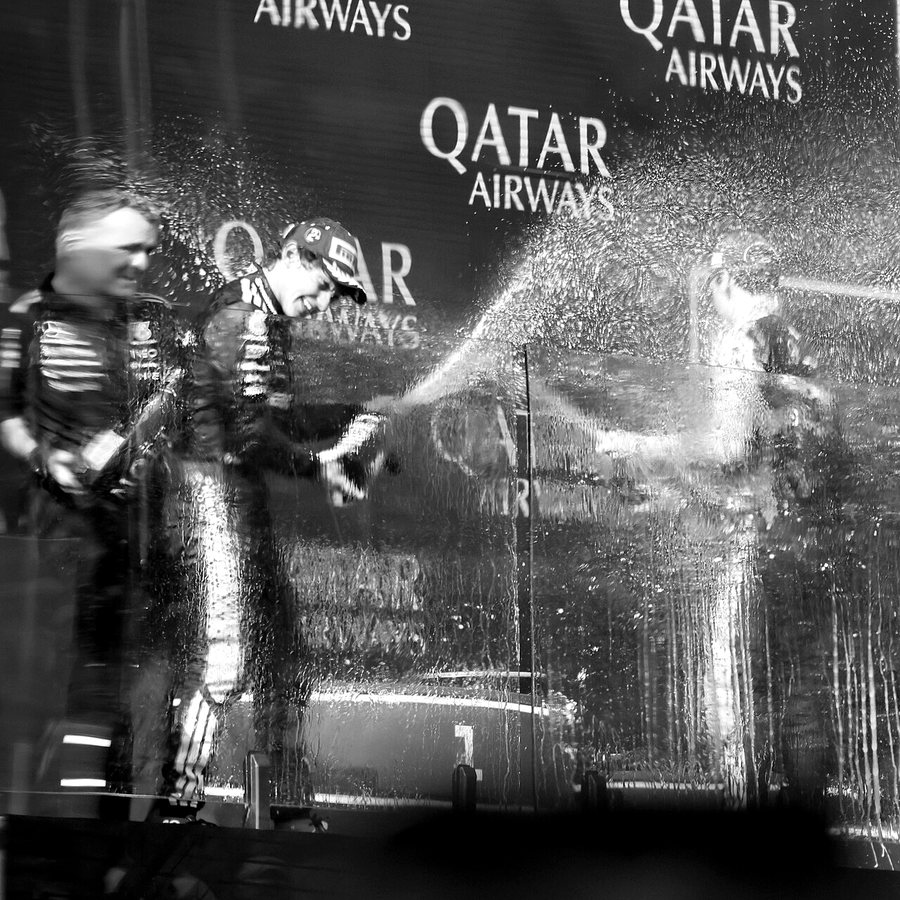

The most consequential structural question in the Mercedes garage sits away from the timing screens. It lives in the engineering organisation, in the distinction between the person who speaks to a driver and the people who shape the decisions that driver is asked to accept.
Peter “Bono” Bonnington is Kimi Antonelli’s race engineer. He is also Mercedes’ Head of Race Engineering. Marcus Dudley is George Russell’s Senior Race Engineer. Those titles are not interchangeable.
The race engineer is the driver’s principal technical partner at the circuit. The role involves translating the driver’s impressions into engineering language, interpreting data, managing setup discussions, relaying strategy and acting as the driver’s most immediate connection to the team’s wider operation. The voice on the radio is how a complex organisation becomes intelligible to the person driving the car at 300 kilometres per hour.
Dudley performs that role for Russell. Bonnington performs it for Antonelli. But Bonnington also holds the Head of Race Engineering position. That creates a structural overlap that deserves scrutiny, particularly in a season when the two Mercedes drivers have been competing directly for wins and for the championship.
Bono does not personally make every strategic decision, and the available reporting does not suggest he does. Mercedes’ trackside engineering operation is broader than one person. Andrew Shovlin, as Trackside Engineering Director, oversees trackside engineering activities, including race strategy and support. Bonnington’s expanded role sits within that structure; he is not a solitary commander with unilateral authority over every call made on either side of the garage.
That qualification is important. It prevents the argument from becoming an accusation that the evidence cannot carry. But it does not make the structural question disappear.
Bonnington is simultaneously the senior race-engineering figure and the engineer whose primary driver is Antonelli. He is responsible for helping Kimi understand the race, managing his radio communications, advocating for his technical needs and guiding his development. He is also part of the leadership structure that shapes race-engineering practice across the team. Even if the final strategic decision is made collectively, Bonnington occupies a position from which he can influence the framing of problems, the urgency attached to requests and the information that moves up and down the engineering chain.
That is the asymmetry. George has a dedicated race engineer in Marcus Dudley. Kimi has a dedicated race engineer in Bonnington, who also has a wider leadership role. The arrangement does not prove bias; it does mean the two drivers are not represented through identical organisational channels.
Toto Wolff’s own public comments make the closeness of the Bonnington–Antonelli relationship explicit. After the Miami Grand Prix, Wolff praised Bonnington as both a “good mentor” and a “strong boss”. He described a moment when Antonelli had accumulated two track-limits strikes. Wolff told Bonnington that he might intervene over the radio if there were another; Bonnington replied, in effect, that Wolff should leave it to him. Wolff praised the exchange as evidence that Bono knew how to handle Kimi.
That anecdote is revealing because it describes trust. Wolff trusts Bonnington to manage Antonelli. Bonnington has authority with the young driver, and the team principal recognises that authority as part of the driver’s development. The relationship is close, functional and successful. It is also a relationship that gives Kimi a senior advocate who understands him, can discipline him and has the standing to shape how the team responds to him.
The Canadian Grand Prix offers a practical view of how this works under pressure. The radio reconstruction of the Mercedes drivers’ battle shows Dudley and Bonnington communicating with their respective drivers while the team tries to keep the fight under control. Antonelli asks Bonnington for strategic help; Bonnington tells him to stand by. After the drivers run wide, Russell’s side asks for the position to be managed; Dudley tells Russell to leave it to the team, while Bonnington communicates with Antonelli about the potential penalty. The two engineers are each managing a driver, while the organisation tries to preserve a coherent team position.
That is how Formula 1 works. Race engineers are expected to advocate for their drivers. They are not judges. Their loyalty to the driver is part of the job. The question arises because one of those advocates also holds a senior position in the function that serves both cars.
Imagine the same arrangement in another elite sporting environment. One athlete has a personal coach who also heads the coaching department. The other has a personal coach who reports into that department. The department head may be scrupulously fair. The personal coach may be entirely professional. But the reporting lines are still different, and the athlete without the department head as his direct coach is entitled to ask who is representing his interests at the level where the system is designed.
The issue is whether Mercedes has built sufficient separation between his responsibility to Antonelli and his wider authority over race engineering. Good governance depends on structures that remain fair even when everyone is doing what they believe is best.
The Zandvoort and Monza decisions show the distinction at work. At Zandvoort, Russell was asked to move aside after Antonelli’s tyre strategy gave him a potential advantage. The team’s explanation was based on race circumstances and a wider strategy discussion, not a unilateral instruction from Bonnington. At Monza, the split strategy was presented by Mercedes as a collective decision to cover different outcomes. Those facts matter. They show that Bonnington should not be treated as the sole author of every decision that benefited Antonelli.
But they also show that the race engineer is a conduit for decisions that may have been shaped elsewhere. Dudley has to explain a call to Russell. Bonnington has to explain a call to Antonelli. The drivers hear two voices, but the authority behind those voices is not distributed in precisely the same way. If a decision is made by a group, the driver’s confidence depends on knowing that his own interests have been properly represented in that group.
This is where the Mercedes structure needs clarity. Who is Russell’s senior advocate in the race-engineering leadership? Who ensures that Dudley’s view is heard at the same level as Bonnington’s? Who arbitrates when the two sides have competing priorities? Does Shovlin make the final call, does the strategy group decide collectively, or does Bonnington’s role give him an informal influence that is difficult to see from outside? The public reporting establishes the titles and the reporting structure, but it does not provide a complete decision-rights chart. We should not pretend otherwise.
Still, the question is legitimate. A team can have two excellent race engineers and an experienced trackside director, yet still create an imbalance if one driver’s engineer also occupies a senior position in the same function. This is a question about governance.
And there is a further point. Bonnington’s history with Michael Schumacher and Lewis Hamilton gives him extraordinary institutional capital. He knows what a championship campaign demands. He has worked with champions under pressure, and he now has a central role in the development of another. That experience is valuable to Mercedes. It is also a resource Antonelli receives directly. Russell has a capable engineer in Dudley, but he does not have the same senior figure in his ear, nor the same direct relationship with the head of the race-engineering function.
Kimi plainly has a good engineer. The question is whether George has equivalent representation when the matter moves beyond the individual car and into the team’s collective decision-making.
George has an engineer. Kimi has an engineer who is also the head of the engineering function. The question is who, at that level, is looking after George.
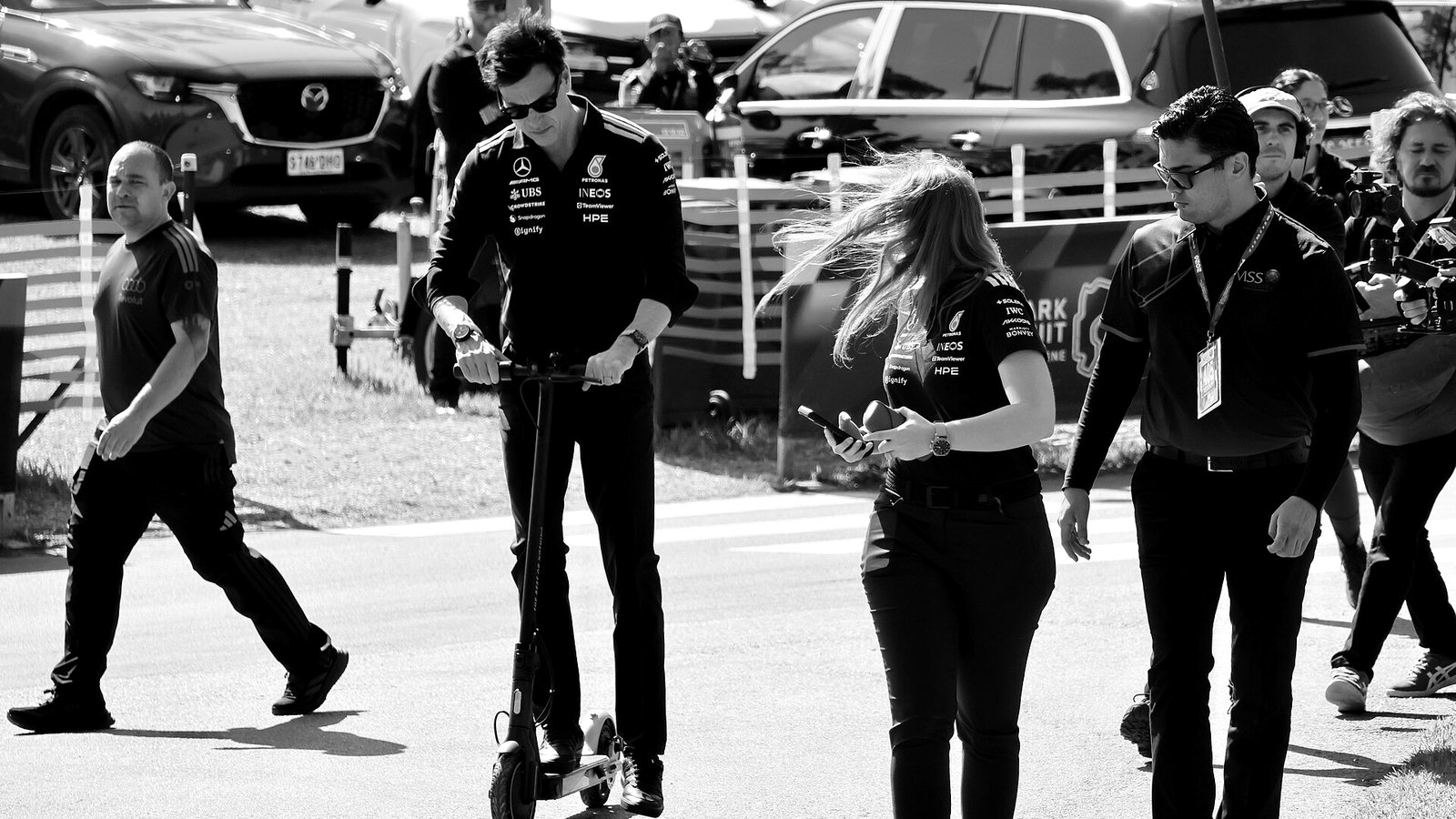

Toto Wolff and the story he needs to be true
Wolff is a sophisticated operator. His public statements are rarely accidental, and his management of Mercedes has always involved more than simply hiring drivers and building cars. He manages shareholders, sponsors, staff, rival teams, the media and the expectations created by the Mercedes name. He also manages the story of Mercedes itself.
The Hamilton era gave the team a clear centre. Hamilton was the champion; the organisation was built around the pursuit of titles; the relationship between driver, engineer and team principal became one of the defining features of modern Formula 1. When Hamilton left for Ferrari, Mercedes lost more than a driver. It lost the central character in its competitive identity.
Russell was the obvious incumbent. He had been developed by the team, served his apprenticeship and demonstrated that he could win. Antonelli was the future, but Mercedes chose to make that future immediate. Wolff therefore had to manage a transition in which the experienced driver and the young prospect were team-mates and competing versions of what Mercedes would become.
The temptation for a team principal in that position is to keep both stories alive. Russell is the proven performer, the driver who can deliver now. Antonelli is the generational talent, the driver who can define the next era. Publicly, both are valuable. Internally, the balance can become difficult because the organisation is trying to harvest the present while investing in the future.
Wolff’s praise of Antonelli’s development is understandable. A young driver winning races and then a championship is an extraordinary return on the team’s investment. But a team principal must also guard against the halo effect: the tendency for a successful strategy to make every decision that preceded it look correct. The fact that Antonelli won the championship does not retrospectively prove that every choice made in his favour was optimal, any more than Russell’s fourth place proves that he was poorly supported.
The right question is more exacting. Did Mercedes create a system in which both drivers could compete honestly, with clear rules and credible representation? Or did the organisation’s desire to validate Antonelli’s promotion subtly alter the way it handled the two sides of the garage?
The answer may not be a dramatic yes or no. It may be that Mercedes managed the transition well in some areas and poorly in others; that its strategic calls were defensible but its communication was uneven; that the team believed it was treating both drivers fairly while failing to appreciate how the structure looked from Russell’s side.
That is not a small management problem. At this level, confidence is a performance input. A driver who trusts the organisation can concentrate on extracting the car’s potential. A driver who suspects that he must negotiate for every scrap of support is carrying an additional burden.
Las Vegas: the incident and the aftermath
The Las Vegas qualifying episode is a useful test because it is specific. Russell asked about getting behind Antonelli for a tow. Antonelli had a five-place penalty. Mercedes did not arrange the tow in the way Russell wanted. Antonelli found a powerful slipstream and set the fastest time; Russell qualified third. Mercedes said the strength of the tow had surprised the team and that Russell had appeared to have an ideal gap, though he lost time through a sequence of corners.
There are at least three ways to read that.
The first is the benign explanation: the team misjudged a rapidly evolving qualifying situation. The tow was more powerful than expected, traffic was difficult to manage, and the final lap sequence was high-risk. Russell still qualified third and moved up to second because of Antonelli’s penalty. On this reading, there was no favouritism, only imperfect execution.
The second is the organisational explanation: Mercedes did not sufficiently prioritise Russell’s request, despite knowing that Antonelli’s penalty changed the relative value of the two drivers’ grid positions. The team may not have intended to disadvantage him, but it failed to convert a straightforward strategic opportunity into an effective plan. It was a failure of attention and execution.
The third is the cynical explanation: Mercedes was content to let Antonelli take the best opportunity because he was the champion and the team’s central figure. That interpretation is emotionally available, especially after the season’s other incidents, but it is not established by the evidence. Suspicion is not the same as fact.
The second explanation is the strongest because it does not need a conspiracy. A team can disadvantage a driver through priorities, assumptions and operational habits without anyone consciously deciding to do so. It can happen because one driver’s needs are more visible, because the organisation is accustomed to managing him closely, or because a request from the other side is treated as something that can be accommodated later.
The race then added another layer, a chaotic contest of repeated lead changes. Mercedes’ own post-race account described a race that had become a pack battle, with the safety car and tyre choices shaping the final phase. Russell’s race ended in frustration, while Antonelli salvaged a strong points finish.
It would be wrong to say that the qualifying tow cost Russell second in the championship. The race itself contained too many variables, and the final result was shaped by events on track. It would also be wrong to pretend the tow was irrelevant simply because Russell started on the front row. In a season where the top positions were being contested by tiny margins, every strategic advantage was worth pursuing.
Russell was not owed a tow as a courtesy. The request was an ordinary piece of team strategy, made in a context where the team had a clear reason to help him. The failure to execute it became a symbol because it fitted a larger question: when Mercedes has to choose where to spend attention, whose interests are most instinctively protected?
What the championship proves, and what it does not
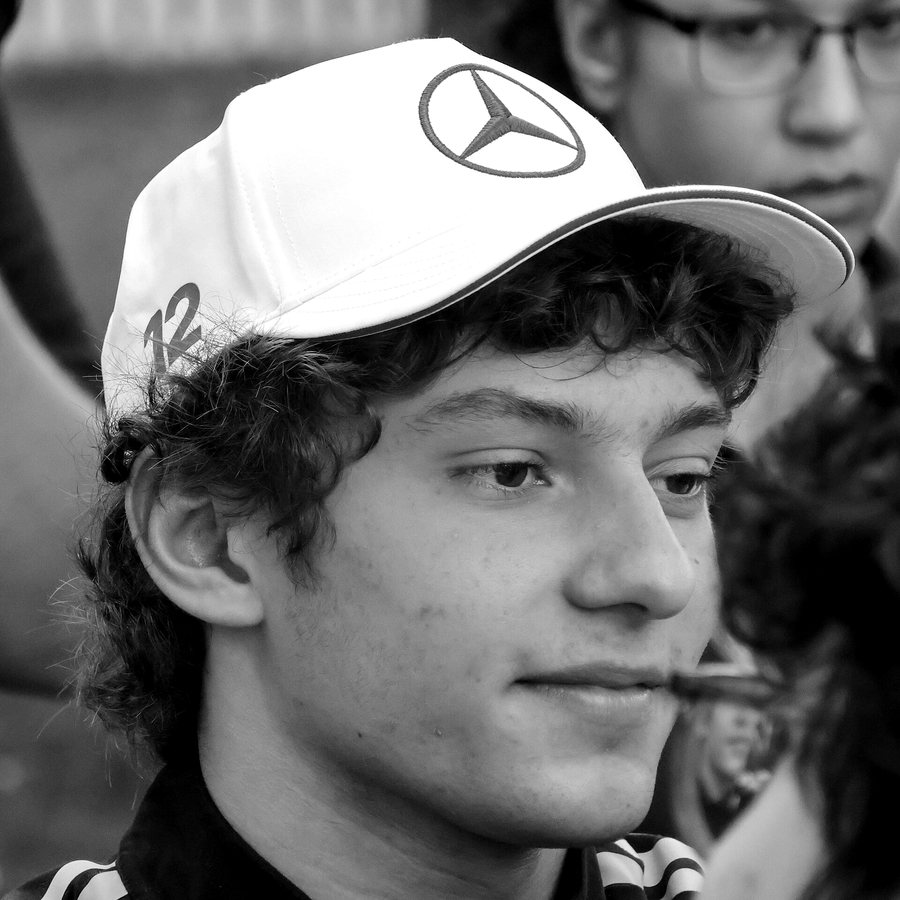

Antonelli is the 2026 Drivers’ Champion. Mercedes is the Constructors’ Champion. Those are substantial achievements, and neither should be diminished by the debate about Russell’s treatment.
The post-Las Vegas standings put Antonelli on 402 points, Verstappen on 304, Hamilton on 267 and Russell on 264, with Norris also on 264. Mercedes had 666 points in the Constructors’ Championship, well clear of Ferrari. The title was secured before the final rounds, and the team had delivered the central objective of the season.
But a championship result only tells us who scored the points. It does not tell us whether every driver received equivalent support, whether the decision-making structure was robust, or whether the team’s internal relationships were arranged in the best possible way.
Kimi’s title validates his talent and Mercedes’ decision to promote him. It does not prove that the succession plan was fair to Russell. George’s fourth place does not prove he was the victim of a deliberate campaign. It does not erase the points he scored, the races he won or the work he did to secure the Constructors’ Championship.
A team can win both championships and still have a driver-management problem. Indeed, success can make such problems harder to address. The people who made the decisions are rewarded; the narrative is settled; the temptation is to treat any criticism as sour grapes. The next season will be won by the quality of the car, the clarity of the team’s rules and the confidence of the people asked to race it.
Mercedes should not need to choose between Russell and Antonelli in public. It does need to make clear how it will choose between competing interests in private. If the drivers are free to race, the team needs a transparent policy for when strategy overrides that freedom. If the cars are split for development, the rationale and the data need to be shared. If one race engineer has a senior leadership role, the team needs a clear account of how the other driver’s interests are represented.
They are the conditions of a credible two-car operation.
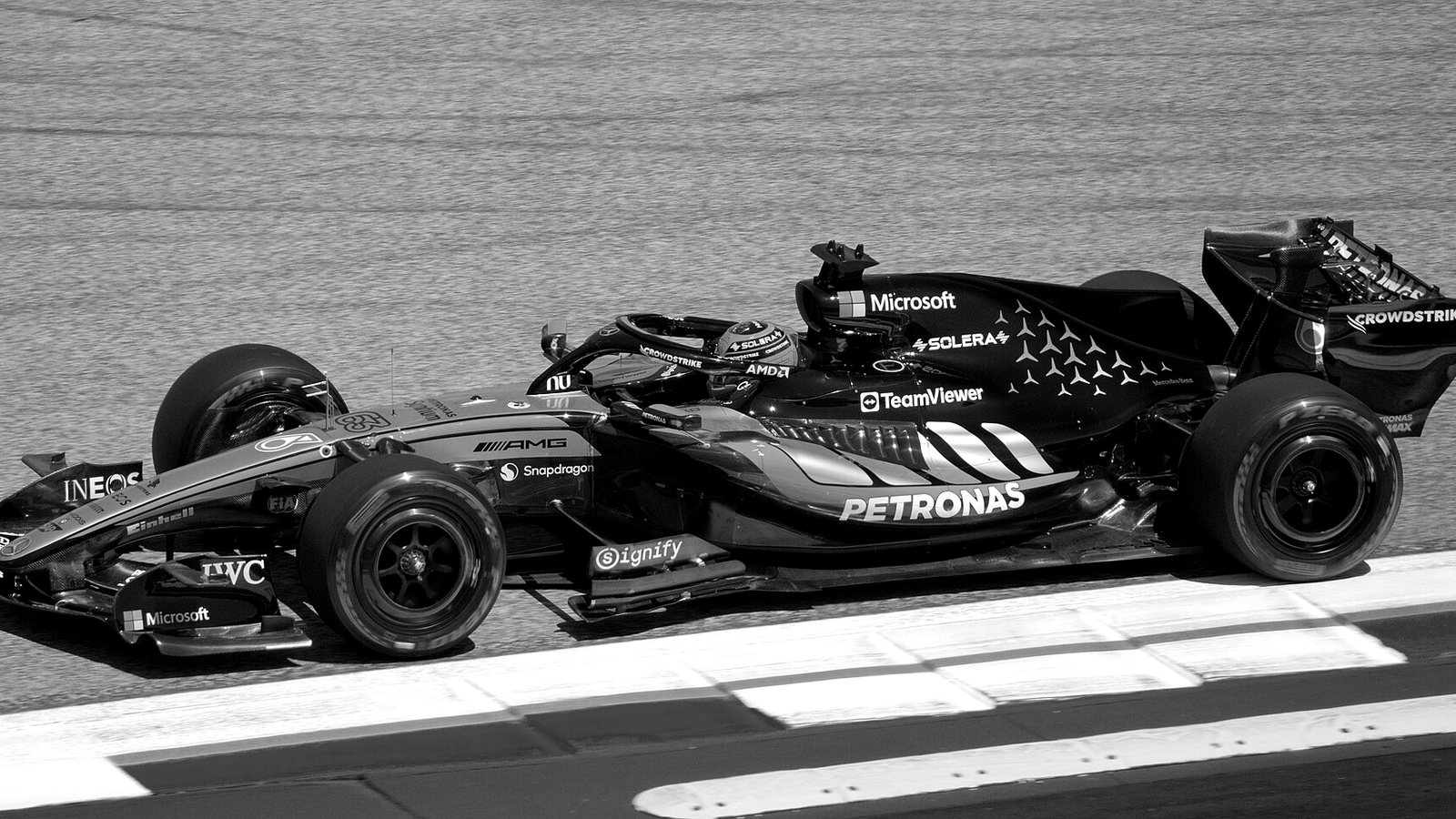

The verdict: has Mercedes screwed George?
The phrase is blunt, but the answer should not be.
Mercedes has not obviously sabotaged George Russell. The public evidence does not establish that. There are incidents where the team’s decisions have been defensible, and there are counterexamples where Russell received the benefit of a strategy or where Antonelli was the one carrying the risk. The Canadian retirement was a power-unit failure. The Monza split strategy was a rational attempt to cover alternatives. The Zandvoort swap was explained by tyre advantage and a pre-discussed team policy. The Las Vegas tow failure was described by the team as a misjudgement of the slipstream and the qualifying traffic.
But “not sabotage” is a very low standard for a team that claims to treat both drivers equally.
The stronger criticism is that Mercedes appears to have placed Russell in a role where his professionalism is assumed and his claims on the organisation must be made explicit. He is the experienced driver who knows the team, understands the politics and can be trusted to absorb an awkward call. Antonelli is the young champion whose development is a strategic priority and whose relationship with a senior engineering figure is central to the team’s future.
That arrangement can work. It can even be the right arrangement for a period of transition. But it needs safeguards. Otherwise the reliable driver becomes the flexible driver, and flexibility becomes a euphemism for being asked to give way.
Russell has earned more than a promise that the team believes in him. He has earned a clear definition of his standing. If Mercedes wants him to be the experienced benchmark against which Antonelli develops, it should say so and negotiate that role honestly. If it wants him to be a co-equal championship contender, it must give him equivalent access to the organisation’s senior decision-making and ensure that his race engineer’s voice carries comparable weight.
The Bonnington question is central here. Bono’s work with Antonelli appears to be a major part of the young champion’s development. That is a success story. But the overlap between his driver-facing role and his leadership position creates a governance issue that Mercedes should address rather than dismiss. It needs to show how Russell is represented at the same level, who arbitrates between competing garage interests and how the team prevents a senior engineer’s advocacy for one driver from becoming entangled with wider departmental authority.
There is no need to accuse Bonnington of bad faith. In fact, the point is stronger without doing so. A sound structure should not rely on the personal virtue of one individual. It should make the right thing clear, repeatable and visible.
The same applies to Wolff. He does not have to pretend that both drivers occupy identical positions in the long-term plan. They do not. Antonelli is the champion and the future-facing investment. Russell is the established driver whose value has been demonstrated over years. What Wolff owes them is clarity about the terms of the competition and a system that can withstand scrutiny when their interests diverge.
The Constructors’ Championship belongs to both drivers and to the people who built the car. The Drivers’ Championship belongs to Antonelli. Russell’s contribution should not be treated as a footnote to either achievement. He has helped make Mercedes a champion team while continuing to fight for his own place in it.
So, has Mercedes screwed George? Not in the provable, cartoon-villain sense. But it has allowed a situation to develop in which the question is reasonable. It has relied on Russell’s steadiness while building a structure that visibly gives Antonelli a particularly powerful line into the organisation. It has not yet made the case, in a way that is convincing from the outside, that the two drivers have equivalent representation when the decisions become difficult.
That is the reckoning. A demand for governance. A reminder that one driver’s success does not absolve a team of its obligations to the other.
Epilogue: can a guy get a tow?
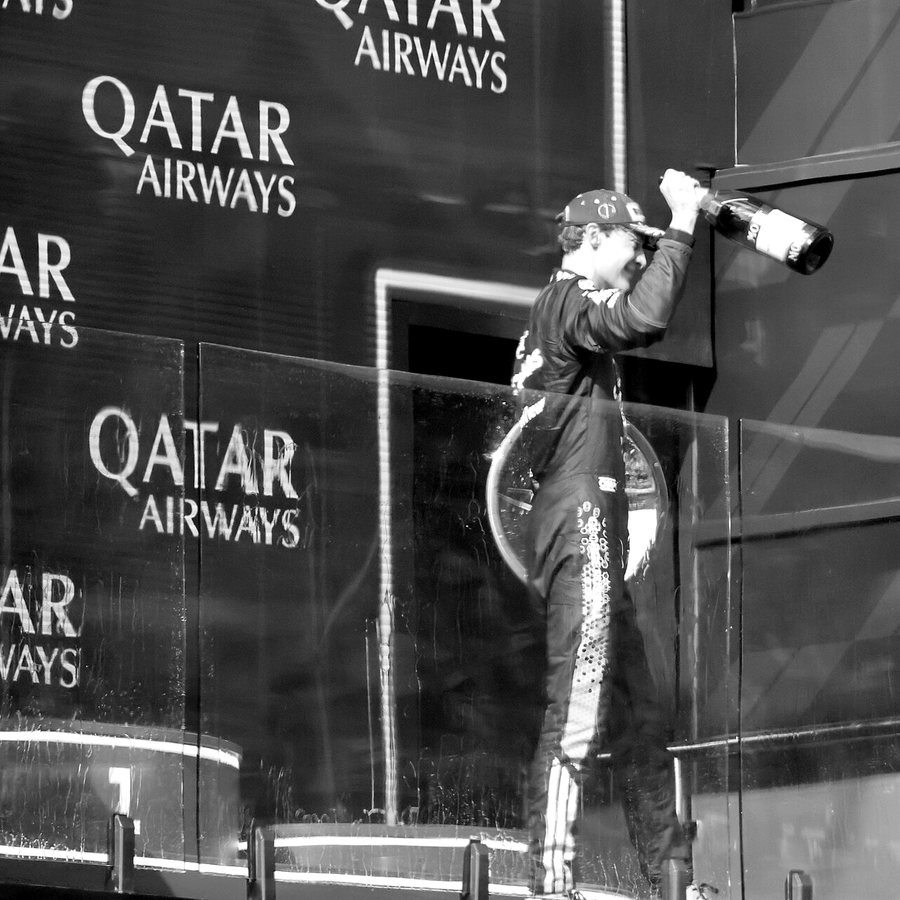

A tow is a small thing. A few metres of air, a carefully timed release, a team-mate doing a job that benefits the other car. It can change a qualifying lap. It can change a grid position. It can change the tone of a weekend.
The deeper question is what happens when a driver asks for something reasonable and the organisation fails to deliver it. Does the team explain the failure, learn from it and make sure the same thing does not happen again? Or does it expect the driver to shrug, get in the car and carry on because that is what the reliable one always does?
George Russell has spent much of his Mercedes career carrying on. He did it through the difficult cars, the succession uncertainty, the Verstappen speculation and the arrival of a team-mate whose development became a central project. He did it through the strategic calls that worked and the ones that did not. He did it in Las Vegas, too, even after the tow never arrived.
Kimi Antonelli has earned his championship. He should be allowed to enjoy it without being made responsible for the architecture around him. Bono should be judged on his engineering work. Toto Wolff should be judged on whether he can turn a successful season into a fair and durable team structure.
And George should not have to keep proving that he is worth backing.
Because in Formula 1, talent gets you on the grid. Pace gets you into the fight. A championship requires a team. And a team is more than two cars, two engineers and a shared set of overalls. It is the system that decides whose voice is heard when the plan changes, whose interests are represented when the cars are split, and who is expected to make the compromise.
The tow was only the latest small test. Mercedes passed the championship test. The question is whether it can pass the trust test.
Sources
- FIA, 2026 Las Vegas Grand Prix media kit: official event information and pre-race championship standings.
- FIA, 2026 Las Vegas Grand Prix championship points: official championship table following the event.
- ABC News Australia, 22 November 2026: F1 Las Vegas Grand Prix live coverage: race result and championship standings after Las Vegas.
- Formula1.com, 21 November 2026: What the teams said – Qualifying in Las Vegas: Mercedes’ account of the tow, Russell’s qualifying position and Wolff’s comments.
- Formula1.com, 21 November 2026: Russell on the “insane” tow power in Las Vegas: Russell’s own assessment of the slipstream and qualifying.
- Motorsport.com, 21 November 2026: Why Mercedes’ tow plan for George Russell fell apart in Las Vegas: detailed reporting on the qualifying sequence.
- Mercedes-Benz Media, 22 November 2026: 2026 Las Vegas Grand Prix – Saturday: Mercedes’ official race account, including Russell’s P9 and Antonelli’s P4.
- BBC Sport, 21 August 2024: Engineer Bonnington not joining Hamilton at Ferrari: Bonnington’s promotion to Head of Race Engineering.
- Formula1.com, 8 May 2026: Wolff on Bonnington as mentor and strong boss for Antonelli: Wolff’s description of Bonnington’s role and authority with Kimi.
- Formula1.com, 24 May 2026: Canadian Grand Prix race report: Russell and Antonelli’s on-track battle and Russell’s power-unit retirement.
- Formula1.com, 25 May 2026: What the teams said – Race day in Canada: Mercedes’ account of the race and the two-driver battle.
- Formula1.com, 23 August 2026: Wolff explains Mercedes’ Dutch GP driver swap: the late-race decision to invert Russell and Antonelli.
- Formula1.com, 23 August 2026: Russell’s verdict on Dutch GP team orders: Russell’s own assessment of the instruction to let Antonelli through.
- Formula1.com, 6 September 2026: Antonelli’s Monza victory: Antonelli’s recovery from P19 and his late pass on Russell.
- Formula1.com, 6 September 2026: What the teams said – Race day in Italy: Mercedes’ explanation of the split strategy at Monza.
- Formula1.com, 10 October 2026: Wolff on Mercedes’ split-spec strategy in Singapore: the different specifications run by Russell and Antonelli as the team investigated its upgrade.
- Motor Sport Magazine, 26 January 2026: Who are all the F1 race engineers in 2026?: race-engineer roles and the Mercedes assignments.
- GPblog, 12 January 2026: Mercedes makes decision on race engineers for Russell and Antonelli: Dudley’s and Bonnington’s assignments and Bonnington’s wider role.
Editorial note. This feature distinguishes verified team statements and race results from analysis of organisational incentives. It does not allege deliberate sabotage. The Bonnington section identifies a potential structural conflict of responsibilities, not evidence of personal misconduct.
Photography from Wikimedia Commons under Creative Commons licences, credited with each image. Images are converted to black and white and cropped; adapted images are shared under the same licence.